Soil Stabilization: Strengthen the Ground Beneath
Weak or unstable soil causes foundation problems. We use chemical grouting, compaction grouting, and deep soil mixing to strengthen soil and support your structure. Serving Tampa, Orlando & Central Florida.
What Is Soil Stabilization?
Soil stabilization strengthens weak or unstable soil beneath and around your foundation.
When soil is too weak, has voids (from sinkholes or erosion), or doesn't compact properly, it can't support your foundation. Soil stabilization addresses the soil itself—filling voids, binding particles, and creating a stable base.
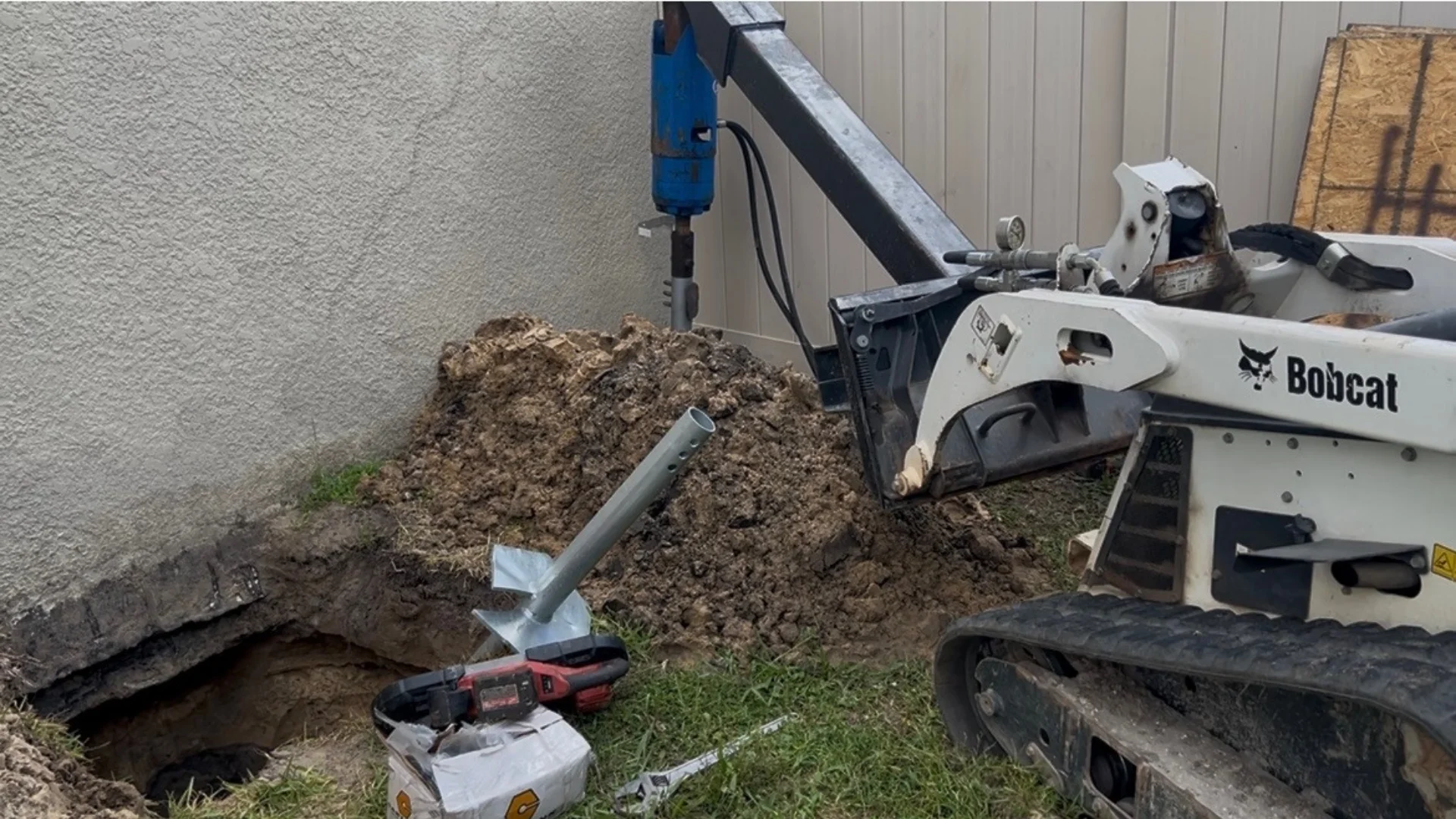
Unlike piering, which bypasses bad soil by transferring weight to deep stable layers, stabilization improves the soil in place. The right approach depends on your specific situation.
Soil Stabilization Methods
We use proven techniques for Florida's challenging soil conditions.
Chemical Grouting
Injecting polymers or chemical compounds into the soil to bind particles together. Creates a stronger, more cohesive soil mass. Effective for sandy soils and small voids.
Compaction Grouting
Injecting low-slump grout into the soil under pressure. The grout displaces and compacts loose material, filling voids and increasing density. Common for sinkhole remediation.
Deep Soil Mixing
Mixing stabilizing agents (cement, lime, or other binders) with soil in place. Creates columns or panels of stabilized soil. Used for larger areas or new construction.
When Soil Stabilization vs Piering?
Choosing the right approach depends on the problem.
Soil Stabilization Is Best For:
- Voids from sinkholes or erosion
- Loose, uncompacted fill
- Preventive treatment before problems worsen
Piering Is Best For:
- Foundation settling/sinking
- When stable soil exists at depth
- Structural support and lifting
- Permanent load transfer
Sometimes we use both—stabilize the soil, then install piers.
Florida Soil Types & Challenges
Central Florida's unique geology demands expert soil solutions.
Sandy soil: Doesn't compact well, erodes easily with heavy rain. Common across Tampa, Orlando, and the coast.
Limestone bedrock: Florida sits on karst terrain—limestone that dissolves over time, creating sinkholes and voids.
High water table: Water movement causes soil to shift. Drainage and stabilization work together.
Expansive clay: In some areas, clay soils expand and contract with moisture—stressing foundations.
We understand Florida's soil. During your free inspection, we'll assess your conditions and recommend the right solution.
Related services: Foundation Repair • Helical Piers
Frequently Asked Questions
What is soil stabilization?
Soil stabilization strengthens weak or unstable soil beneath and around your foundation. Methods include chemical grouting (injecting polymers to bind soil particles), compaction grouting (injecting grout to fill voids and compact loose material), and deep soil mixing. The goal is to create a stable base that supports your structure.
When is soil stabilization needed vs piering?
Soil stabilization is often used when voids exist (e.g., sinkhole activity) or when soil is too weak to support piers. Piering transfers weight to deep stable soil; stabilization improves the soil itself. Sometimes we use both—stabilize the soil, then install piers for additional support.
Is soil stabilization preventive or remedial?
Both. Preventive stabilization strengthens soil before construction or before problems worsen. Remedial stabilization fixes existing problems like sinkholes, voids, or settlement. We assess your situation and recommend the right approach.
What are Florida's soil challenges?
Florida has sandy soil that erodes easily, high water tables, limestone bedrock prone to dissolution (sinkholes), and expansive clays in some areas. These conditions make soil stabilization and proper foundation support critical for Central Florida homes.
Do you serve Tampa and Orlando?
Yes. We serve Tampa, Orlando, St. Petersburg, Clearwater, Lakeland, Brandon, Daytona Beach, Kissimmee, and 100+ cities across Central Florida.