Helical Piers: Deep Support for Your Foundation
Helical piers are screw-in steel piers that anchor your foundation to stable soil deep below the surface. Fast installation, minimal excavation, and permanent support for Central Florida homes.
What Are Helical Piers?
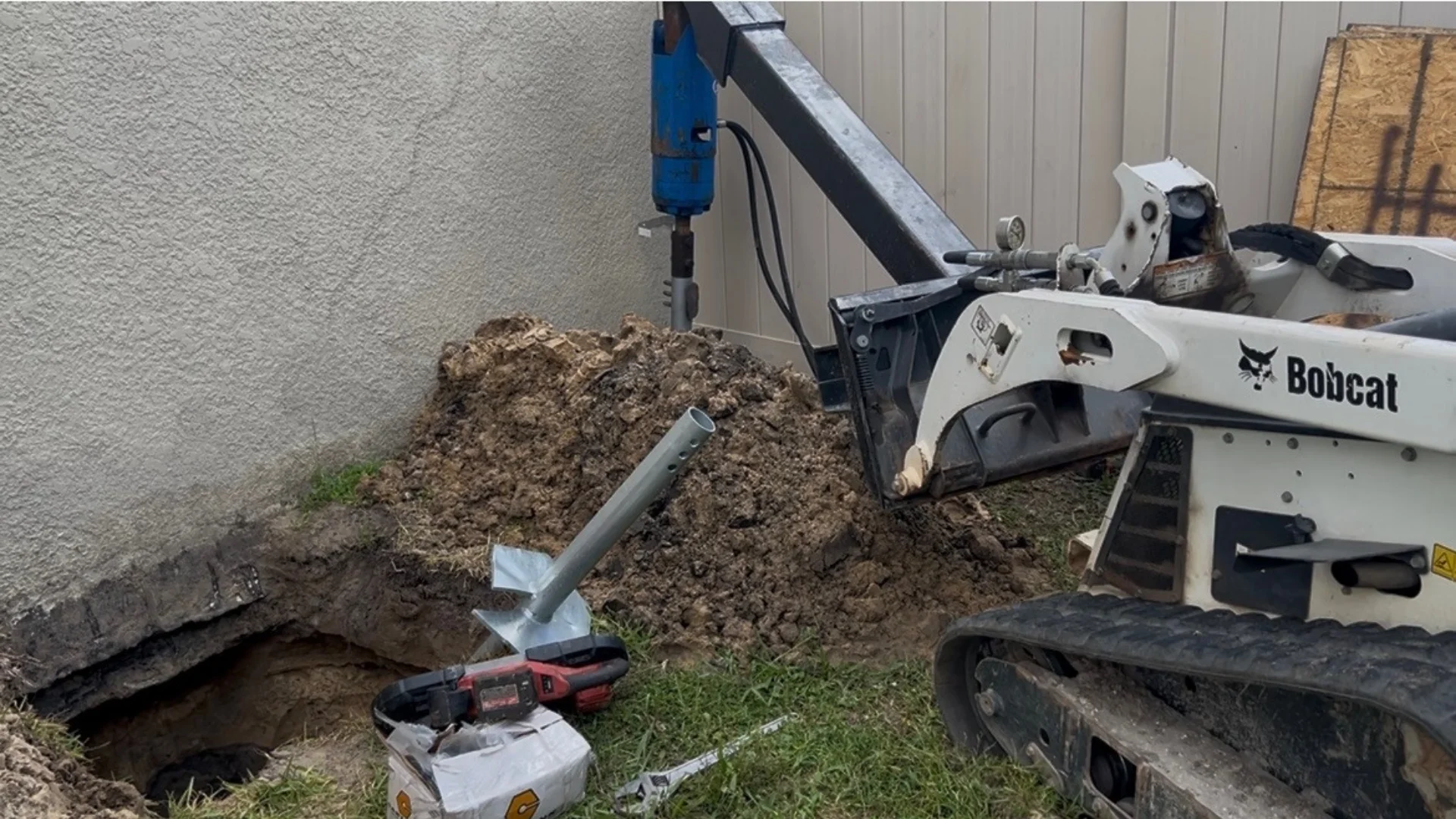
Helical piers (also called screw piles or helical anchors) are steel shafts with helical plates welded to them. They're screwed into the ground like a giant screw until they reach stable, load-bearing soil.
Once installed, helical piers transfer your foundation's weight from unstable surface soil to the stable soil below. This stops settling immediately and can even lift your foundation back toward its original position.
Helical piers have been used for over 100 years in construction, from residential homes to commercial buildings, bridges, and boardwalks. They're a proven, permanent solution for Florida's challenging soil conditions.
When Are Helical Piers the Best Choice?
Helical piers are ideal for specific foundation and soil conditions.
Helical piers are ideal for:
- Foundations where bedrock is too deep for push piers
- Lighter structures (residential homes, decks, porches)
- Poor or varied soil conditions
- Limited access areas (minimal equipment needed)
- New construction (preventive installation)
Helical piers may not be ideal for:
- • Extremely heavy structures (push piers better)
- • Rocky soil that prevents screw-in installation
Helical Piers vs Push Piers
During your free inspection, we assess your soil conditions and foundation to recommend the best pier system for your home.
| Factor | Helical Piers | Push Piers |
|---|---|---|
| Installation | Screwed in | Driven/pushed in |
| Best soil conditions | Varied, doesn't need bedrock | Needs bedrock or stable stratum |
| Best for | Lighter structures | Heavier structures |
| Installation time | 1-2 days | 1-3 days |
| Depth | 10-30+ feet | Until bedrock is reached |
Helical Pier Installation Process
From inspection to completion, we make foundation repair straightforward.
Inspection & Engineering
We assess your foundation damage, soil conditions, and determine optimal pier placement.
Excavation
Small holes are dug at pier locations—typically along the foundation perimeter. Minimal disruption to landscaping.
Pier Installation
Helical piers are screwed into the ground using hydraulic equipment until they reach stable soil with adequate load capacity.
Bracket Attachment
Steel brackets connect the piers to your foundation, transferring weight to the piers.
Lifting (if needed)
Using hydraulic jacks, we can lift your foundation back toward its original position, closing cracks and leveling floors.
Backfill & Cleanup
Excavated areas are backfilled and cleaned. Most homeowners can't tell we were there.
Related services: Foundation Repair • Push Piers • House Leveling
Frequently Asked Questions
What are helical piers?
Helical piers (also called screw piles or helical anchors) are steel shafts with helical plates welded to them. They're screwed into the ground like a giant screw until they reach stable, load-bearing soil. Once installed, they transfer your foundation's weight from unstable surface soil to the stable soil below.
How long do helical piers last?
Helical piers are made of galvanized steel and are designed to last 100+ years. We offer transferable warranties that protect your investment and add value when you sell.
How long does installation take?
Most helical pier installations take 1-2 days depending on scope. Installation is fast because helical piers screw in—no driving or waiting for concrete to cure. We'll provide a timeline during your free inspection.
When are helical piers better than push piers?
Helical piers work best when bedrock is too deep for push piers, for lighter structures, and in varied soil conditions. Push piers are better for heavier structures where bedrock is accessible. During your free inspection, we'll recommend the best option.
Do you serve Tampa and Orlando?
Yes. We serve Tampa, Orlando, St. Petersburg, Clearwater, Lakeland, Brandon, Daytona Beach, Kissimmee, and 100+ cities across Central Florida.